The Art of Ruthless Editing How to Polish Your Prose Without Losing Your Voice
June 12, 2026 · Mike Williams
The Art of Ruthless Editing: How to Polish Your Prose Without Losing Your Voice
The magic of great writing doesn't happen during the first draft; it happens during the structural edit. A raw draft is simply you telling yourself the story. The edit is where you reshape that raw material into an engaging experience for your reader.
However, many writers approach self-editing with a heavy hand. They strip away excessive words but accidentally delete their personal style, conversational tone, and unique human perspective in the process. The final text ends up sounding sterile, robotic, and identical to a generic AI response.
The goal of true structural editing isn't to erase your voice—it is to remove the unnecessary fluff so your unique perspective can truly shine.
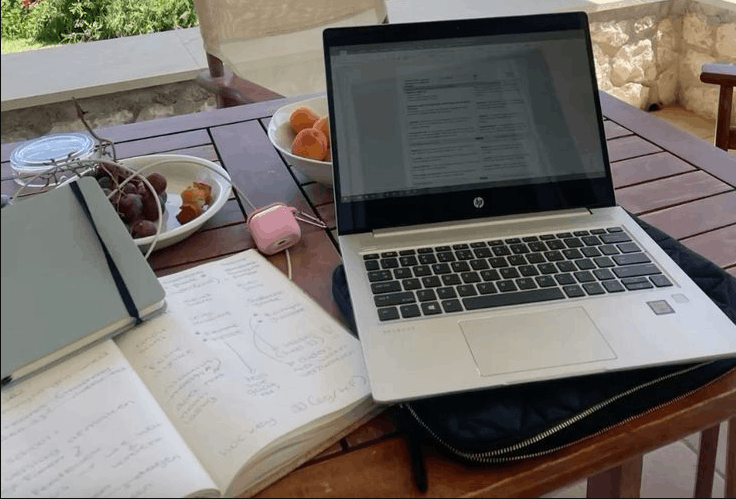
What is Sentence Economy?
Sentence Economy is the stylistic discipline of maximizing informational value while minimizing word count.
It is the deliberate removal of weak verb-adverb pairings, redundant clauses, and heavy corporate filler words that delay your point. Mastering sentence economy does not mean stripping out your personality; it means cleaning up the linguistic clutter around your ideas so your authentic message carries a sharp, immediate emotional impact.
1. The Multi-Pass Editing Strategy
Trying to fix structural layout, spelling, syntax, and pacing all at the same time is highly inefficient. Your brain will miss subtle errors. Instead, break your editing routine into clear, focused passes.
- Pass 1: Structural Integrity: Look at the macro arrangement of your sections. Do your arguments flow logically? Do your headings answer real, predictable reader questions? Move entire blocks around before tuning individual words.
- Pass 2: Sentence Economy: Hunt down and delete lazy phrasing. Replace weak verb-adverb pairings with strong verbs (e.g., change "ran quickly" to "sprinted"). Trim filler phrases like in order to down to to, and due to the fact that down to because.
- Pass 3: The Auditory Test: Read your piece out loud. If you stumble over a long sentence, or run out of breath mid-clause, break it into two smaller sentences. If a phrase sounds unnatural spoken aloud, it will read unnaturally to your audience.
2. Protect Your Natural Conversational Anchors
To prevent your prose from sounding overly formal, protect your stylistic choices. Idioms, short sentences, and occasional personal reflections give your writing its unique personality.
- Keep Intentional Fragmented Sentences: Used sparingly, they create dramatic pause and mimic natural human speech patterns.
- Vary Sentence Lengths: Mix short, punchy sentences with longer, rhythmic clauses to create engaging visual pacing on the page.
- Use Accessible Vocabulary: Choose clear communication over sounding complex. If a reader needs a dictionary to understand your point, you've broken their immersion.
Preserving Your Conversational Baseline
The easiest way to preserve your natural human voice is to speak your initial thoughts aloud before you touch a keyboard. Capturing this organic phrasing directly creates a highly authentic foundation for your final piece.
Capturing an Authentic Conversational Baseline From the Start
Using a browser-focused platform like VerboText allows you to record your live voice natively within your browser window. Rather than outputting a chaotic transcript, the tool instantly refines your verbal brainstorming session into three structured formats:
- Simple and Polished Text: A clean, beautifully flowing draft that keeps your authentic conversational tone while removing unnecessary filler words.
- Summary: A concise overview of your primary arguments.
- Bullet Points: A scannable list of your core talking points.
Since it runs entirely inside your browser and avoids complex audio file uploads, it fits seamlessly into a fast-paced writing routine. It gives you an ultra-clean, conversational baseline that requires far less editing to sound professional.
The Prose Optimization Index
When you review your final draft, use this semantic framework to ensure every sentence earns its place on the page.
| Editing Criteria | Unrefined Prose Example | Optimized Prose Structure |
|---|---|---|
| Word Economy | "There are many different types of writers who find that..." | "Many writers discover that..." |
| Active Structure | "The article was meticulously written by Sarah to help..." | "Sarah wrote the article to help..." |
| Clarity of Meaning | "Utilize cutting-edge methodologies to maximize output." | "Use simple systems to write faster." |
By editing with purpose, you create clear, concise content that honors your reader's time while highlighting your unique human voice.